
Last updated:
Know When You Need a Drafter, an Architect, or a Designer
Many homeowners and property owners struggle to understand the difference between a drafter vs architect vs designer when starting a project. Choosing the wrong professional can lead to delays, added costs, or unnecessary complications.
This guide breaks down the difference between drafter and architect, explains what each professional does, and helps you determine who you need for building plans based on your specific project.
If you already have an idea or existing space, services like CAD drafting services and as-built documentation can help turn your vision into accurate, usable plans.
What Does a Drafter Do?
Understanding the Role of a Drafter
A drafter specializes in turning concepts into precise technical drawings using CAD drafting services. If you already have a clear idea or sketch, a drafter is often the most efficient and cost-effective professional to bring your plans to life.
Drafters create:
- permit drawings
- Floor plans
- Site layouts
- Shop drawings
These drawings are essential for construction and approvals, making drafters a key part of the building process.
For many homeowners, a drafter is the right choice when:
- You need permit-ready drawings
- You’re working from an existing structure
- You want accurate documentation before construction
If your project involves an existing space, as-built documentation and 3D laser scanning services can provide the exact measurements needed before drafting begins.
Project Type
New home or major remodel
Bathroom/kitchen redesign

Creating floor plans from ideas/sketches
Commercial tenant buildout
Custom interior finishes and lighting layout
Permit-ready drawings from existing concept
Who You Need
Architect
Designer (maybe drafter)
Drafter

Architect + Drafter
Designer
Drafter
What Does a Designer Do?
Understanding the Role of a Designer
A designer focuses on how a space looks and feels. Unlike a drafter, who focuses on technical accuracy, a designer emphasizes aesthetics, layout flow, and user experience.
Designers typically handle:
- Interior layouts
- Material selections
- Color palettes and finishes
- Lighting concepts
If your goal is to improve the appearance or functionality of a space, a designer helps bring creativity and vision to the project.
However, designers usually do not produce construction drawings or permit drawings required for building approval.
For best results, designers often work alongside professionals providing CAD drafting services to ensure the design can actually be built.
What Does a Architect Do?
Understanding the Architect's Role

An architect is a licensed professional responsible for designing buildings that meet safety codes, structural requirements, and legal regulations.
Architects handle:
- Complex building design
- Code compliance and regulations
- Structural coordination
- Full construction drawings
- Project oversight
If your project involves:
- New construction
- Major structural changes
- Commercial buildings
Then hiring an architect is typically required.
Architects often rely on accurate field data, which is where 3D laser scanning services and as-built documentation become critical. These services provide precise measurements of existing conditions before design begins.
Comparing Design Professionals
This table helps you understand the distinct roles of drafters, designers, and architects, guiding you to the right professional for your project needs.

Drafter
- Turn architects’ or engineers’ ideas into permit ready plans and digital models.
- Use CAD/BIM software to create detailed plans with exact dimensions, materials, and notes.
- Coordinate structural, mechanical, and electrical information so drawings fit together correctly.
- Update drawings when designs change and check them for accuracy and code compliance.
- Provide drawings and documentation that builders, permit offices, and fabricators use to build.

Designer
- Design attractive, functional spaces or products that meet client goals and brand or style guidelines.
- Develop visual concepts, sketches, and mood boards to explore and communicate design ideas.
- Coordinate with architects, engineers, or marketers so aesthetics align with technical and business needs.
- Select materials, colors, finishes, and fixtures to balance look, durability, and budget.
- Refine designs based on client feedback and usability, improving comfort and user experience.

Architect
- Design safe buildings that meet codes and protect people who use them.
- Create construction drawings that show builders exactly what to build.
- Coordinate with engineers and builders so structure, electrical, and mechanical systems all work together.
- Improve cost and energy efficiency by choosing smart layouts, materials, and systems.
- Check that construction matches plans and fix design issues that come up on site.
Common Scenarios in Design and Construction
Scenario 1: “I need a floor plan for a new garage.” → Contact a Drafter. They will provide the necessary technical drawings and ensure your plans are ready for permits.
Scenario 2: “I’m planning a home renovation and need help with the interior design.” → Reach out to a Designer. They will assist with layout flow, material selection, and aesthetic enhancements.
Scenario 3: “We are developing a new commercial building and need comprehensive design and compliance oversight.” → Hire an Architect. They will manage the design process and ensure all legal and building code requirements are met.
We Can Help You Understand the Difference and Save Resources
By understanding the distinct roles of drafters, designers, and architects, you can streamline your project planning, reduce unnecessary costs, and avoid common frustrations. Each professional brings unique expertise to the table, ensuring your project is handled with precision and creativity. Whether you need detailed technical drawings, aesthetic design solutions, or comprehensive architectural oversight, knowing who to call can make all the difference.
Why the distinction matters for homeowners
Drafter, architect, and designer are often used interchangeably, but they describe different roles, qualifications, and legal authority. Understanding the difference helps homeowners hire the right professional for the project — and avoid paying for more than they need or, worse, discovering too late that they hired too little. The right choice depends on the scope, complexity, and permitting requirements of your specific project.
Getting this decision right early saves money and prevents delays, because the wrong professional either can't stamp the drawings you need or brings a level of service your simple project doesn't require.
What a drafter does
A drafter (or drafting technician) produces technical drawings — turning a design, sketch, or set of measurements into clean, accurate, dimensioned documents. Drafters excel at precise CAD documentation and are often the most cost-effective choice when you already know what you want built and simply need professional drawings to communicate or permit it.
What a drafter typically does not do is provide licensed design authority or structural certification. For straightforward projects — a deck, a garage, an interior layout — a skilled drafter working from accurate measurements is often exactly what's needed.
What an architect does
An architect is a licensed professional trained in building design, code, safety, and the art of shaping space. Architects can stamp drawings, navigate complex permitting, and take responsibility for how a building performs and complies. For significant projects — new homes, large additions, structural changes, or anything requiring design creativity and code expertise — an architect brings judgment and authority a drafter cannot.
That expertise comes at a higher cost, which is why architects are usually reserved for projects where their licensed skills genuinely add value.
What a designer does
"Designer" is the broadest and least regulated term, covering building designers, interior designers, and others who shape how a space looks and functions. A good designer bridges creativity and practicality, but the title alone doesn't guarantee licensure or the authority to stamp structural drawings. Always confirm exactly what a designer is qualified to deliver for your project.
For aesthetic and functional planning that doesn't require licensed certification, a designer can be an excellent and cost-effective partner.
Which one do you actually need?
Match the professional to the project. For simple, non-structural work where you know what you want, a drafter producing accurate drawings is often enough. For creative, complex, or structural work — especially anything triggering serious permitting — an architect's licensed expertise is worth it. For look-and-feel planning, a designer fits well. Many projects use a combination, with each professional handling the part they do best.
When in doubt, describe your project to a professional and ask directly what level of documentation and certification your permits will require.
The foundation every professional needs: accurate conditions
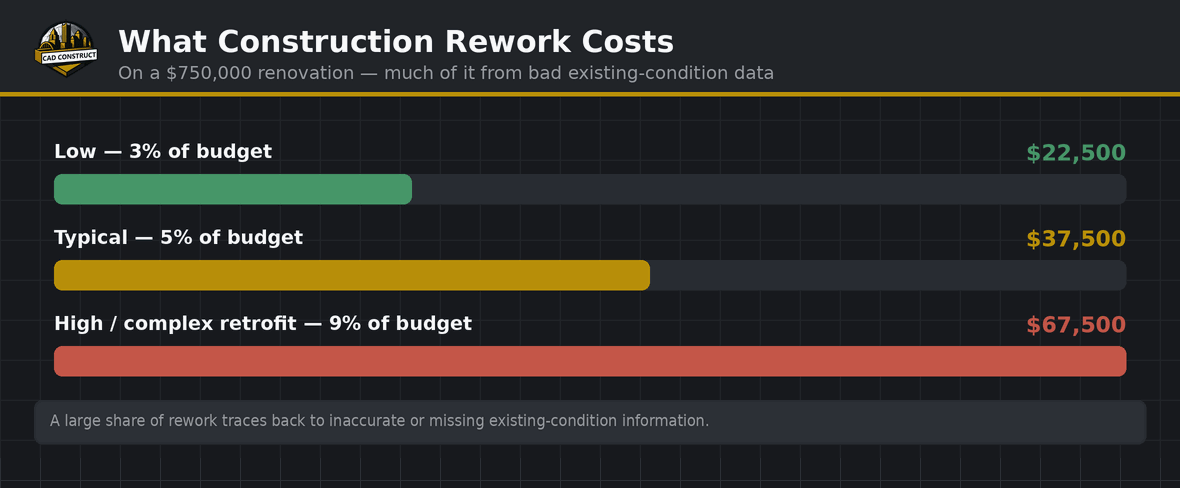
Whichever professional you hire, their work is only as good as the existing-conditions information they start from. For renovations and additions, accurate as-built documentation of the current structure is essential — and it's the single most common thing homeowners overlook. Starting from measured reality prevents designs that don't fit and change orders that blow the budget.
Based in Pittsburgh and serving Western Pennsylvania, CAD Construct provides 3D laser scanning and accurate as-built drawings that give drafters, architects, and designers alike a dependable foundation to work from. Providing your chosen professional with accurate existing conditions is one of the best investments a homeowner can make.
FAQ
Is a drafter cheaper than an architect? Generally yes. Drafters focus on producing accurate drawings and are cost-effective when you already know what you want built and don't need licensed design authority.
Do I always need an architect for an addition? Not always. Simple, non-structural additions may only need a drafter and accurate drawings, but structural changes and complex permitting often require a licensed architect. Check your local requirements.
What should I give my architect or drafter to start? Accurate existing-condition measurements. A 3D laser scan or professional as-built drawings give any design professional a reliable starting point and reduce costly surprises later.
Related work: See real 2D drawings and CAD deliverables in our CAD portfolio.


0 Comments