Last updated:
Key takeaways:
- Specify deliverables, accuracy, LOD, and file formats explicitly.
- State the coordinate system, areas, and access to avoid surprises.
- Clear scope yields comparable bids and fewer change orders.
What to include in a 3D laser scanning scope or RFP — deliverables, accuracy, LOD, format, and coverage — for accurate bids.
Define the deliverable first
The clearest scopes state the end deliverable (CAD or BIM), accuracy, LOD, file format, coverage, and site access.
Why it matters
A clear scope means accurate, comparable bids and no surprises.

Why a clear scope leads to better results
Commissioning a laser scan starts with clearly describing what you need, and a well-written scope or request for proposal is the single best way to ensure you get results that fit. A vague request invites mismatched proposals, misaligned expectations, and deliverables that miss the mark, while a clear one lets providers understand exactly what you want and respond with accurate, comparable proposals. Learning how to articulate a scanning project — what to capture, to what accuracy, and in what form — pays off in smoother projects and deliverables that actually serve their purpose.
The good news is that writing a strong scanning scope does not require deep technical expertise, just clarity about a few key questions.
Start with the purpose
The most important thing to convey is why you need the scan and how the data will be used. A scan for design coordination has different requirements than one for facility documentation, marketing visualization, or dimensional verification. When providers understand the end use, they can recommend the right approach, accuracy, and deliverables to serve it. Stating the purpose up front — even before technical details — anchors everything else and helps a knowledgeable provider guide you toward what the project genuinely needs rather than guessing at your intent.

Define what needs to be captured
Be specific about the extent of the work: which buildings, areas, floors, systems, or exterior spaces need scanning, and just as importantly, what is excluded. Clarifying the boundaries of the project prevents both under-scoping, where something important is missed, and over-scoping, where you pay to capture more than you need. If only certain systems or spaces matter, say so. A clear description of the physical scope lets providers plan accurately and price fairly, and it ensures the capture covers exactly what you intend.
Specify the accuracy you need
Accuracy requirements shape how a scan is performed and what it costs, so it helps to indicate how precise the data must be. Not every project needs the tightest tolerances — documentation and visualization may accept more relaxed accuracy, while structural coordination or fabrication demand high precision. If you are unsure, describing the use lets the provider recommend an appropriate accuracy level. Being clear about accuracy prevents the mismatch of paying for precision you do not need or, worse, receiving data that is not precise enough for its intended purpose.

Describe the deliverables
Perhaps the most critical part of a scanning scope is specifying what you want to receive. A raw point cloud, a BIM model, CAD drawings, and a colorized visualization are very different deliverables requiring different effort. State the format you need, the software it must work in, and the level of detail or information required. If you need a model, describe how much detail and what systems it should include. Clear deliverable requirements are what ensure the final product drops smoothly into your workflow rather than arriving in a form you cannot use.
Include site and logistical details
Practical information about the site helps providers plan and price accurately. Note the size and complexity of the space, any access restrictions, security or safety requirements, whether the site is occupied, and any scheduling constraints. Mention hard-to-reach areas, hazards, or spaces that must be captured at particular times. These logistical details significantly affect how a scan is carried out, and sharing them up front leads to realistic proposals and avoids surprises on scan day that could disrupt the work or inflate its cost.

State your timeline and coordinate needs
If your project has deadlines, share them, including both when scanning must occur and when deliverables are needed. Providers can then confirm they can meet your schedule and plan accordingly. Similarly, if the scan must align with survey control or a particular coordinate system to integrate with other data, note that requirement clearly. These details ensure the deliverable arrives when you need it and in a form that fits with the rest of your project information, rather than requiring rework to meet a schedule or coordinate requirement that was not communicated.
Leave room for provider expertise
While clarity is essential, a good scope also invites the provider’s expertise. Experienced scanning professionals can recommend approaches you might not have considered, flag requirements you may have overlooked, and suggest efficiencies. Rather than dictating every technical detail, describe your needs and outcomes and let providers propose the best way to meet them. This balance — clear about what you need, open about how to achieve it — produces the strongest proposals and often surfaces better solutions than a rigid specification would allow.

How CAD Construct helps you scope a project
CAD Construct works with clients to define scanning projects clearly, helping translate goals into the right scope, accuracy, and deliverables. For owners, designers, and contractors across the Pittsburgh region, that means guidance in articulating what a project needs and proposals grounded in a clear understanding of the work — so the finished data fits its purpose and the project runs smoothly from scope through delivery.
Comparing proposals fairly
A clear scope pays off most when it is time to compare proposals. When every provider responds to the same well-defined requirements, their proposals become genuinely comparable, and you can evaluate them on equal terms rather than trying to reconcile responses that assumed different things. A vague request, by contrast, produces proposals that vary so much in what they include that comparison becomes guesswork. Investing effort in a precise scope up front therefore streamlines the selection process later, letting you choose a provider based on real, like-for-like differences rather than on who guessed your intentions most generously.

Understanding what drives cost
Knowing what influences the cost of a scanning project helps you scope it wisely. The size and complexity of the site, the accuracy required, the level of detail in the deliverables, and logistical challenges all affect price. Understanding these drivers lets you make informed trade-offs — perhaps relaxing accuracy where it is not critical, or narrowing the scope to the areas that truly matter. A scope written with cost drivers in mind tends to produce better value, because it directs spending toward what the project needs and avoids paying for capability that will go unused.
Clarifying ownership and data rights
It is worth addressing who will own the resulting data and how it may be used. Clarifying that the deliverables and underlying data belong to you, and understanding any terms around their use and storage, prevents misunderstandings later. Because scan data is a lasting asset that you may want to reuse for future projects, being clear about ownership and access ensures you retain the value of what you commissioned. Raising these questions in the scope avoids awkward surprises about rights or access once the project is complete and the data is in hand.

Planning for future needs
A scanning project is often an opportunity to capture data that will serve beyond the immediate task. When scoping, consider whether capturing a bit more, or delivering in a more versatile form, would support future renovations, expansions, or facility management. Because the marginal cost of capturing additional data during a scan is often modest compared to commissioning a new scan later, a little foresight can yield lasting value. Thinking ahead about future needs while scoping ensures the data you gather today remains useful for the projects and decisions that come tomorrow.
Common scoping mistakes to avoid
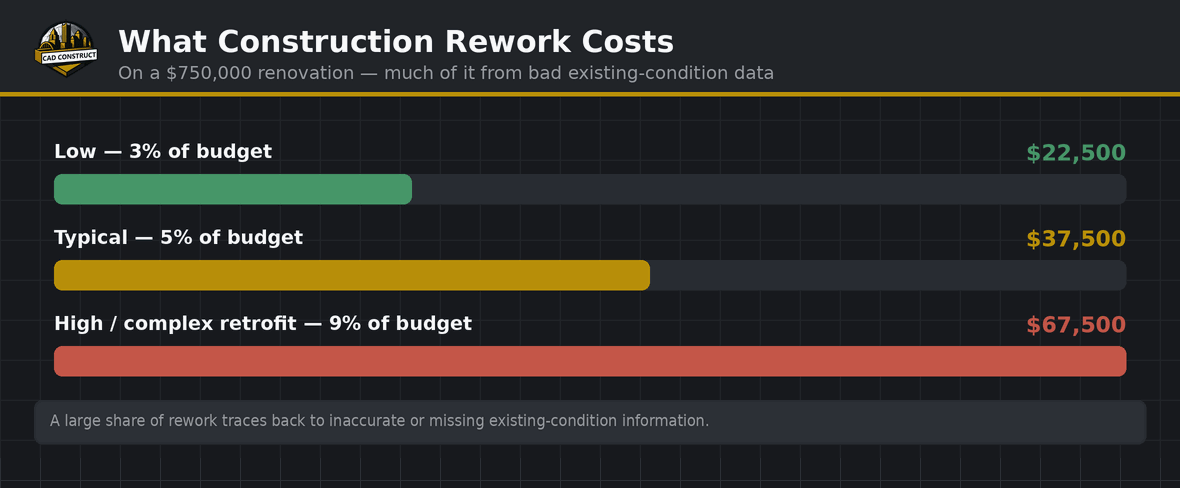
A few pitfalls recur in scanning requests. Failing to state the end use leaves providers guessing at requirements. Neglecting to specify deliverables risks receiving data in an unusable form. Omitting logistical details invites surprises and delays. Over-specifying rigid technical details can prevent providers from proposing better approaches. Being aware of these common mistakes helps you avoid them, resulting in a scope that communicates clearly without over-constraining. Sidestepping these errors is often the difference between a project that runs smoothly and one plagued by mismatched expectations and rework.

Working with your provider early
One of the best ways to write a strong scope is to involve a scanning provider before finalizing it. A brief conversation with an experienced professional can help you clarify requirements, identify considerations you may have missed, and shape a scope that leads to the results you want. Providers welcome this early engagement because it produces clearer projects for everyone. Rather than treating the scope as something to perfect in isolation, drawing on provider expertise while writing it often yields a better-defined project and a smoother path from request to delivery.
The payoff of getting it right
Time spent writing a clear scanning scope is repaid many times over in the quality of the outcome. A well-defined project attracts accurate proposals, sets shared expectations, guides the capture toward what you actually need, and delivers data that fits its purpose. The alternative — a vague request that leads to mismatched results and rework — costs far more in frustration and money. Learning to articulate a scanning project clearly is a small investment that consistently pays off in better data, smoother projects, and results that genuinely serve the goals behind them.
Related reading
Construction Document Packages: What Should Be Included?
Drafter vs Architect vs Designer (2026 Guide for Homeowners)
The Role of AI in Architecture and Engineering
Is 3D Laser Scanning Worth It? Understanding the ROI
How to Choose a 3D Laser Scanning Company · Common 3D Laser Scanning Mistakes to Avoid
FAQ
What’s the most important item? The end deliverable and its LOD.
Can you help scope it? Yes — we’ll help define the right scope.
Get field-verified existing conditions in Pittsburgh
CAD Construct LLC delivers 3D laser scanning, as-built drawings, scan-to-BIM, and 360° virtual tours across Pittsburgh & Western PA. Request a free quote or call (800) 967-2627.
Free tools & templates
- 3D laser scanning cost calculator
- As-built documentation cost calculator
- Scan-to-BIM cost calculator
- 360° virtual tour cost calculator
- Virtual storefront cost calculator
- As-built ROI & rework-cost calculator
- Scan-to-BIM RFP template (Word)
- As-built scope-of-work template (Word)
- Site-prep checklist (Word)


0 Comments